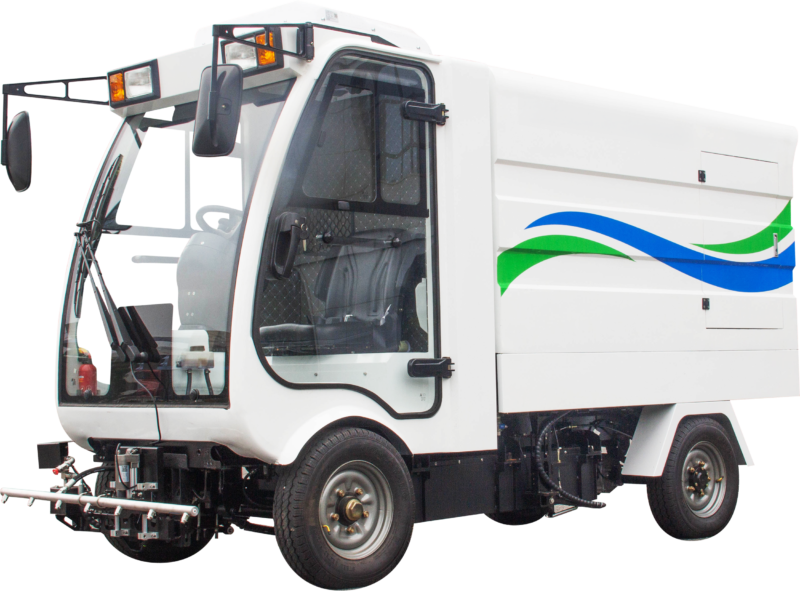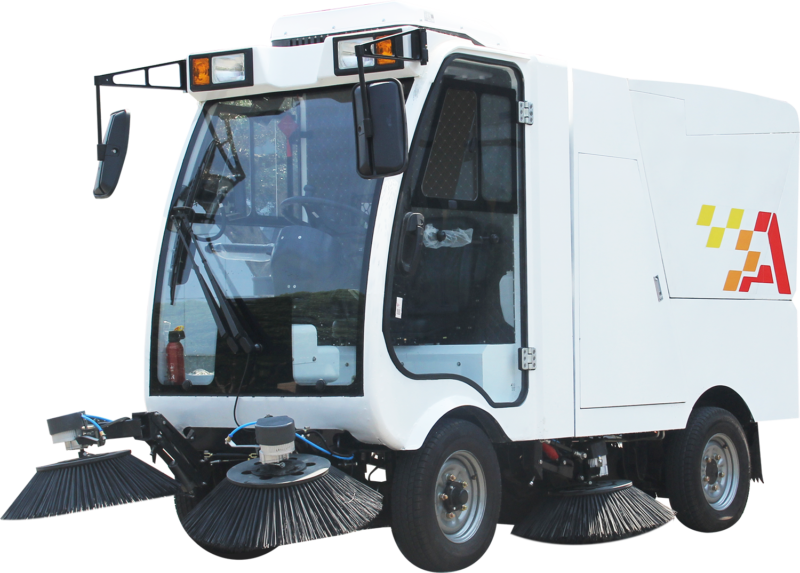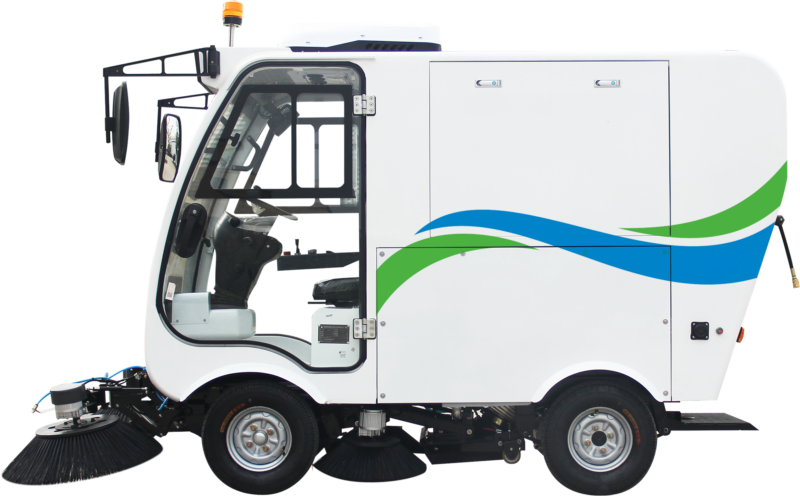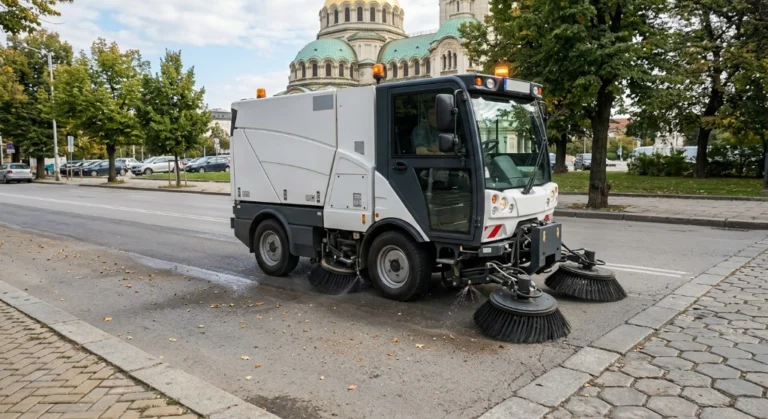
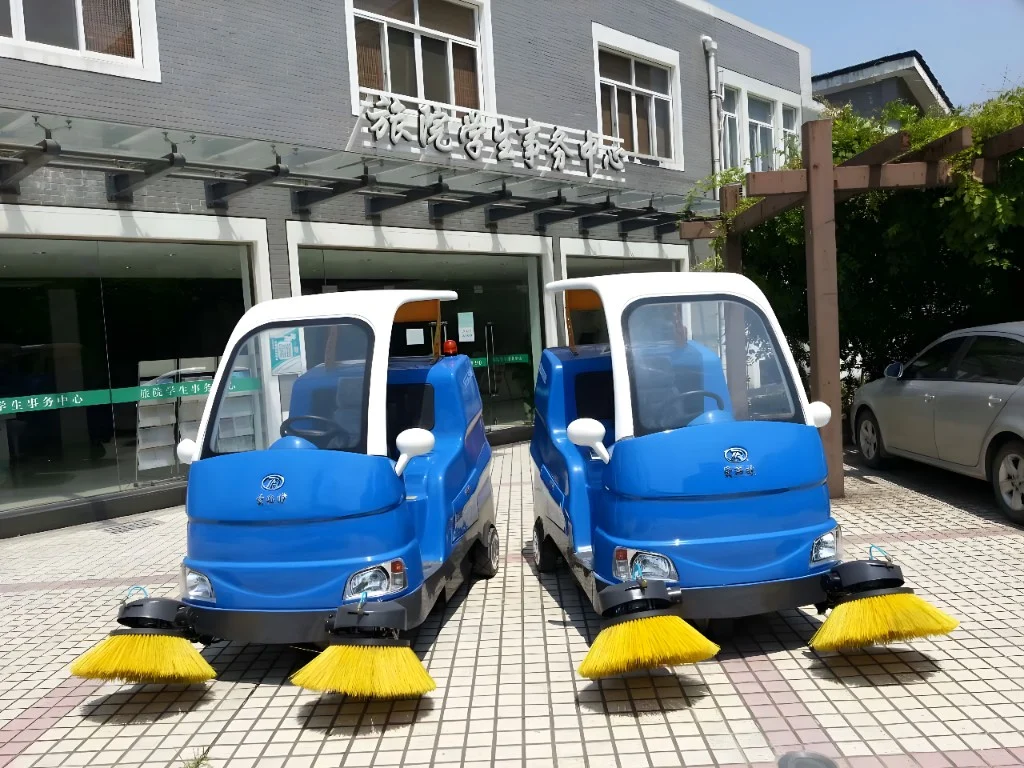
A working shift has a limited number of hours. The areas that need looking after keep growing — streets, car parks, paths, industrial sites, logistics yards and public spaces.
That is why modern professional cleaning asks a practical question:
How much more can one operator achieve with the right machine?
From manual work to a mechanised process
In traditional cleaning, a large part of the time goes into separate physical jobs — sweeping, collecting, moving and taking the waste away.
A professional cleaning machine brings much of that process together.
Depending on the model, it can sweep, collect, vacuum, control dust and hold the waste in its own hopper while the operator runs the whole sequence.
The result is simple:
one person can cover a distinctly larger area in the same working time.
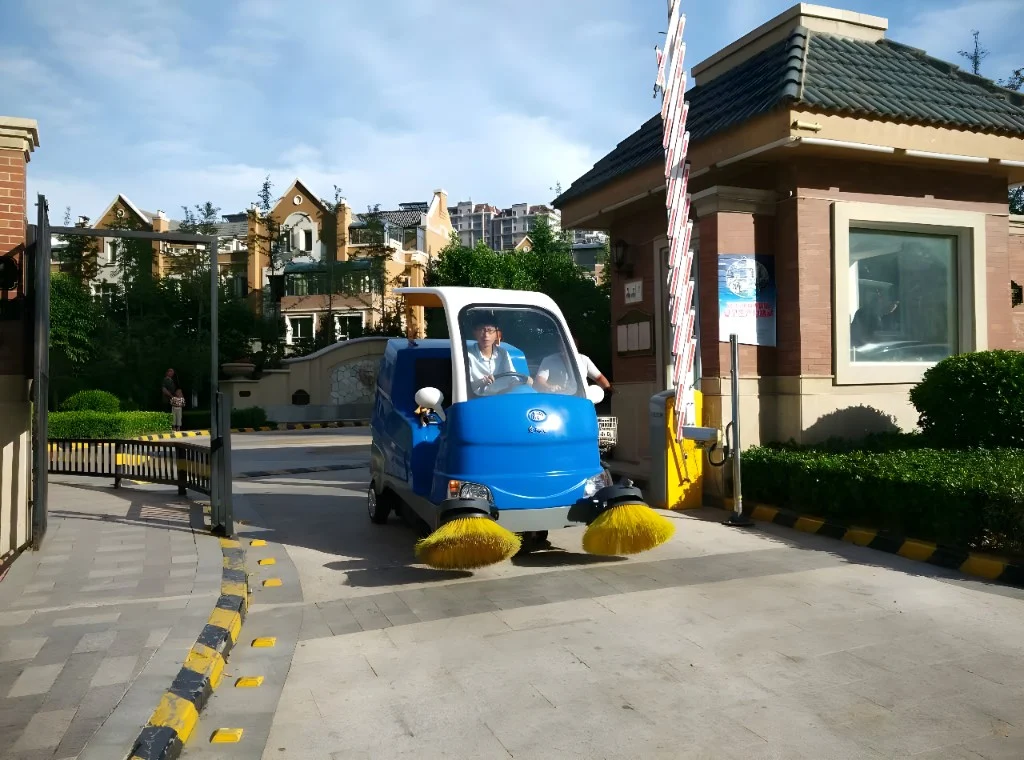
Productivity is not only speed
Professional machines often quote a figure in m²/h.
Real output depends on much more than that:
cleaning width + speed + manoeuvrability + runtime + hopper capacity + the ground itself.
A large machine can be highly effective on an industrial yard, while a compact model may do better in a car park, a pedestrian zone or a site full of obstacles.
So the useful question is not:
“Which machine cleans the most square metres?”
It is:
“Which machine will clean our square metres most effectively?”
Does mechanisation mean fewer people?
Not necessarily.
Higher productivity can mean more area cleaned, more frequent routes, a faster response and a higher standard of upkeep with the team you already have.
The technology takes on much of the heavy, repetitive work; the operator runs the machine and the process.
That is the modernisation that matters:
not simply doing the same job faster, but achieving more with the same resource.
One operator. One machine. A much larger perimeter.
That is why professional equipment changes how cleaning is planned.
Instead of capacity depending mainly on physical labour, the machine adds speed, working width, hopper volume and consistency.
For municipalities this can mean more streets and public spaces covered.
For industrial sites — faster upkeep of large production areas.
For logistics yards — more effective daily routes.
For car parks and commercial sites — regular mechanised cleaning even where access is tight.
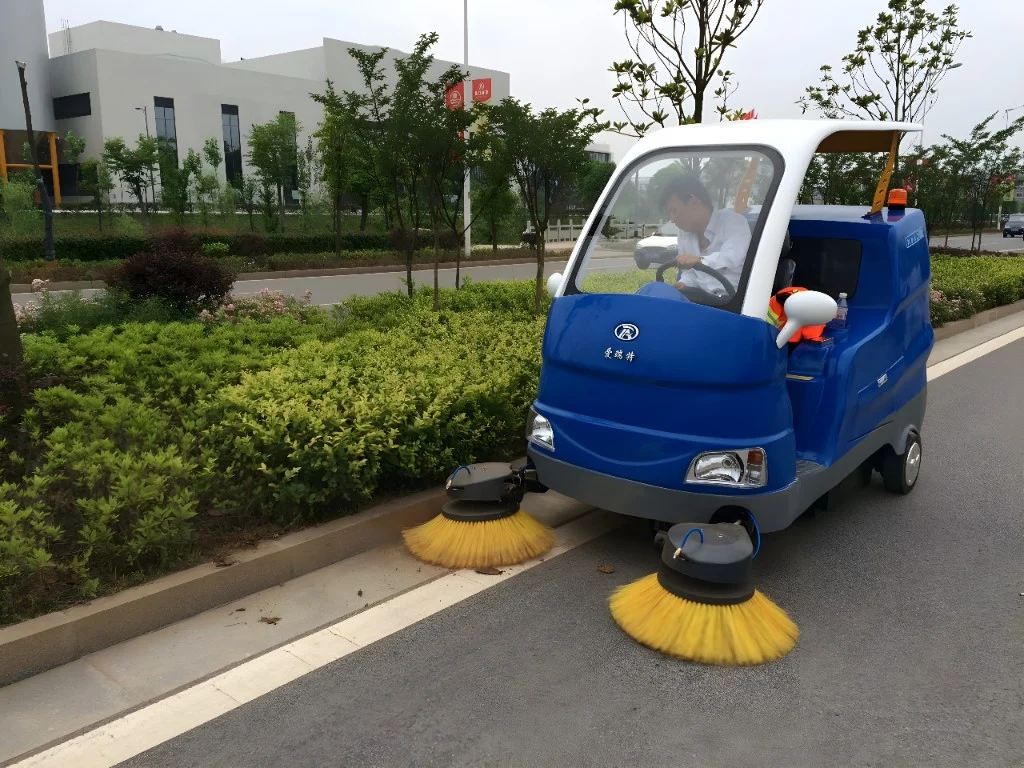
And how much can an Airu-Clean machine clean?
The answer depends on the ground.
That is exactly why the m²/h figure is only the starting point.
The size of the area, the surface, the obstacles, the type of soiling and how often you need to clean all decide which model will work best.
Browse Airu-Clean machines and see how different models turn one working shift into a much larger cleaned perimeter.
Because the real value of a professional machine is not only how fast it moves.
It is how much more it lets you get done.